
New York, Sept. 23, 2026 – As global investors increase their allocations to Africa, a far larger opportunity is exits with the more than US$700 billion in annual demand across infrastructure, climate finance, trade finance, and MSME funding remain unmet.
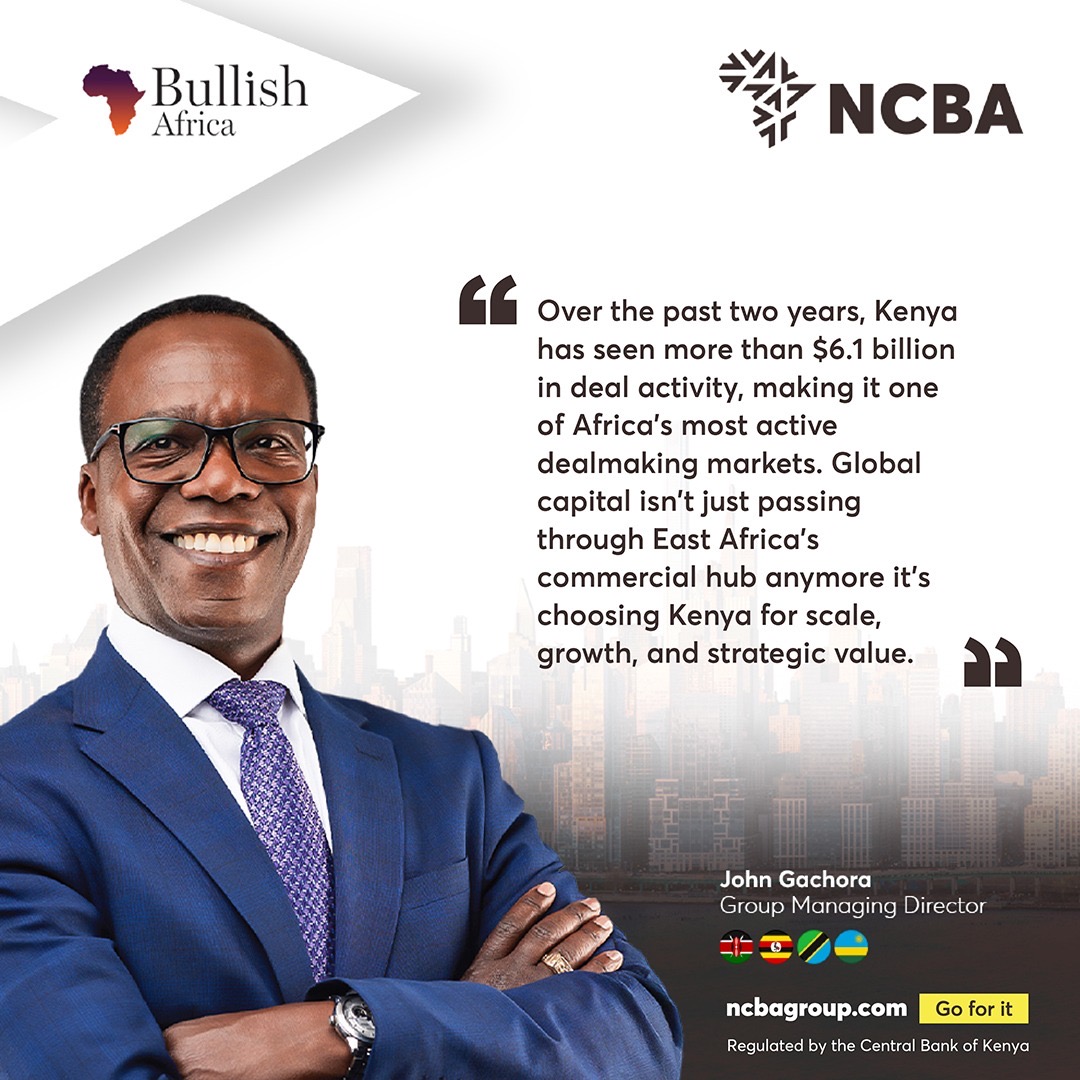
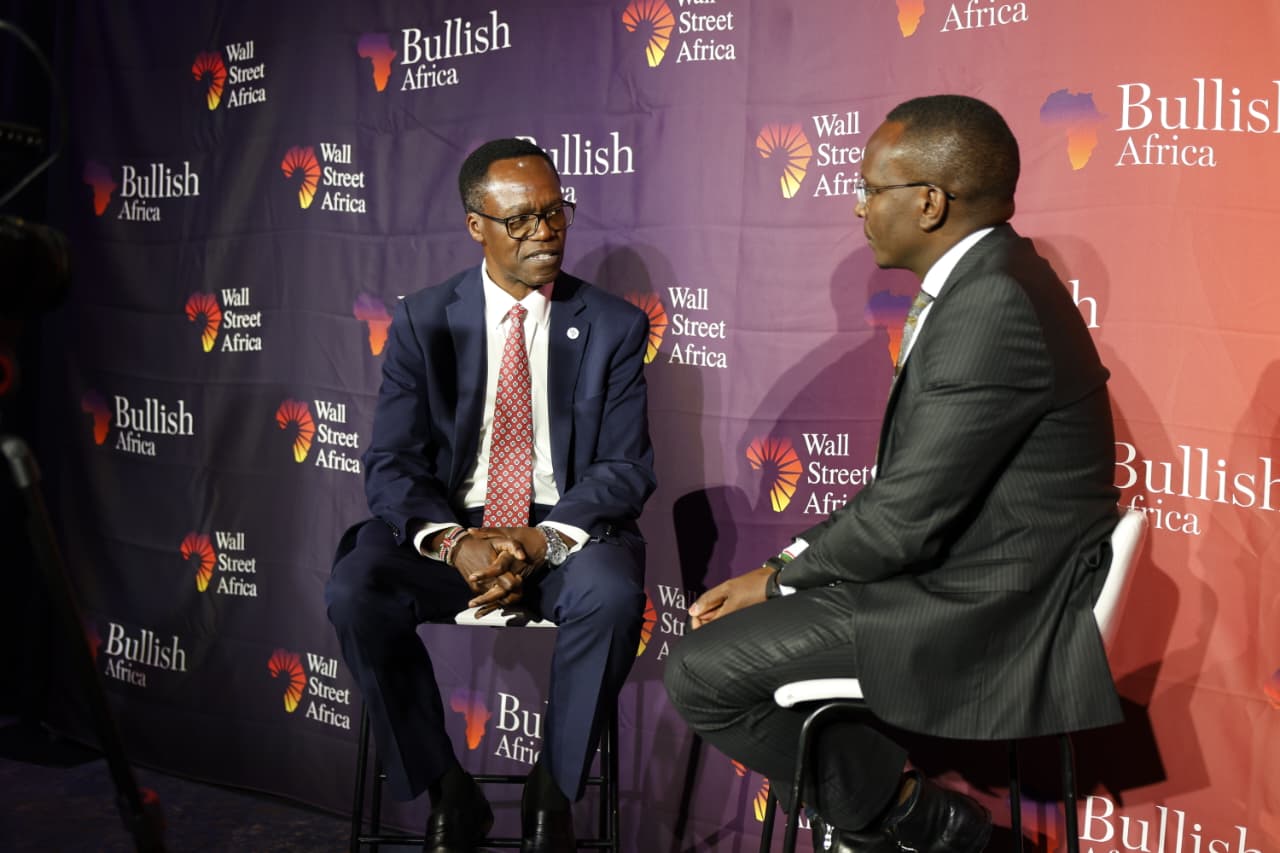
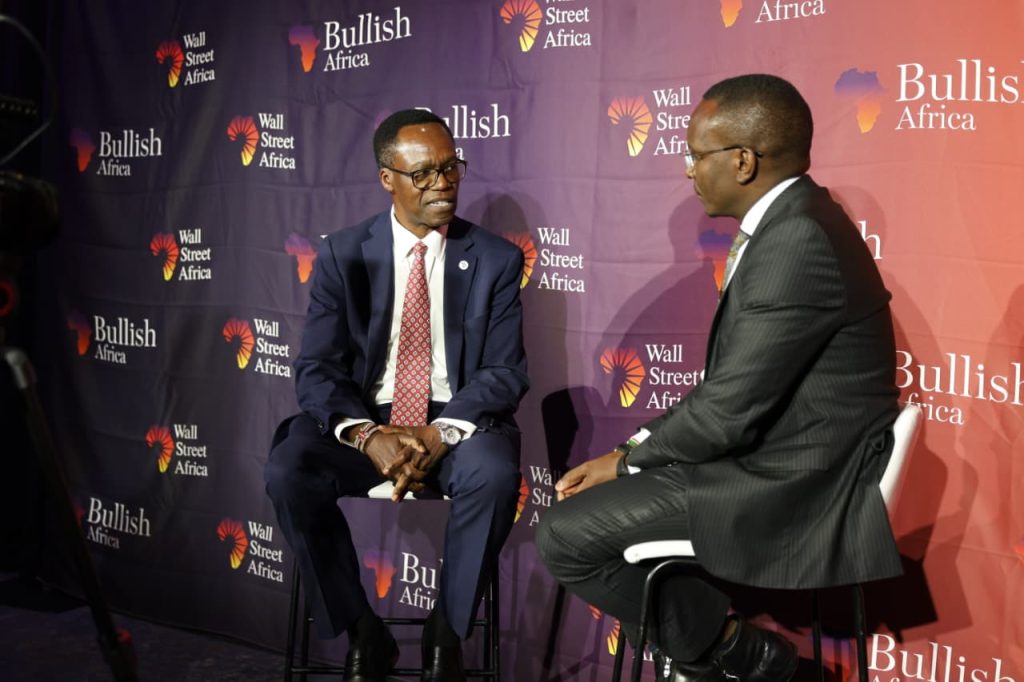
Addressing the opening panel of the Bullish Africa Summit in New York, NCBA Group Managing Director John Gachora argued that global capital is no longer Africa’s binding constraint — the capacity to intermediate it is.
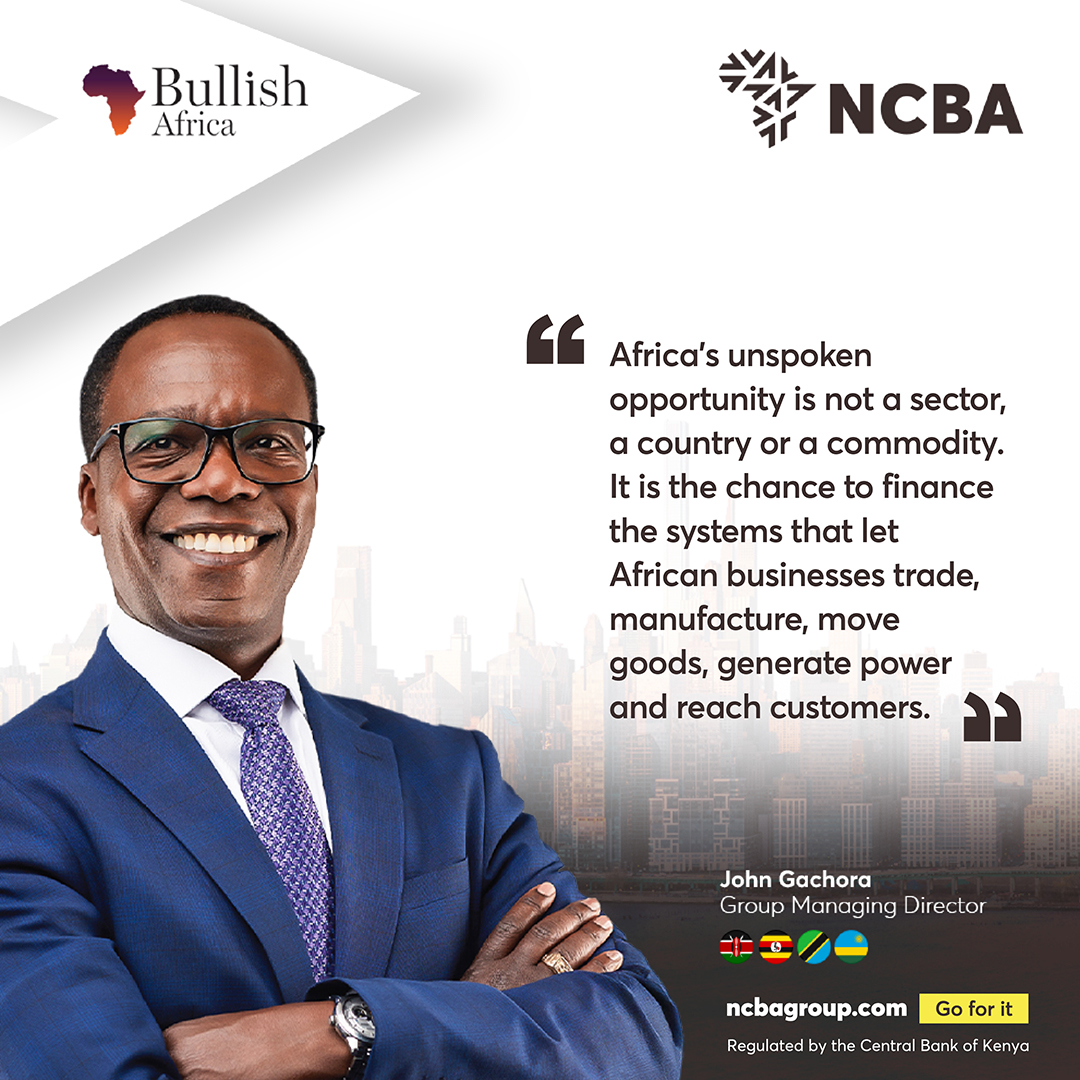
“Africa’s unspoken opportunity is not a sector, a country or a commodity. It is the chance to finance the systems that let African businesses trade, manufacture, move goods, generate power and reach customers,” Gachora said.
Gachora opened with the scale of capital already flowing into the continent. Foreign direct investment reached $70 billion in 2025, the third-highest year in 25 years and roughly a third above the 2010–24 average. Private capital fundraising for Africa more than doubled to $5.1 billion, venture funding held at $3.9 billion across 506 deals, and diaspora remittances are on track to cross $100 billion, nearly double their 2010 level. Mobile money moved $1.1 trillion across 81 billion transactions in 2024, with East Africa alone accounting for $649 billion of that value.
“The buyer of Africa risk has diversified,” Gachora said, pointing to African-based investors, who make up 30% of active venture capital participants, alongside domestic pension funds and development finance institutions.”
He cited a deepening wave of regional consolidation as evidence that African and Gulf institutions, rather than global banks, are building the continent’s intermediation layer: NCBA’s proposed 66% acquisition by Nedbank, which drew 79.9% acceptance and roughly 120% subscription; KCB’s 2022 agreement to acquire 85% of the Democratic Republic of Congo’s Trust Merchant Bank; Equity’s consolidation in the DRC through Equity CDC, where its stake now stands at 85.4%; and ABSA’s acquisition of HSBC’s domestic wealth and business banking book in Mauritius. The same pattern is playing out across the wider capital stack, he said, pointing to MTN’s $6.2 billion acquisition of IHS Holding’s Nigerian tower operations in the first quarter of 2026,the largest African private capital transaction of the period and Afreximbank’s $4 billion-led facility for the Dangote Refinery.
East Africa, Gachora added, is proving the model: the region attracted $14.6 billion of FDI in 2025, up 12%. “Look at where the institutional signals point. Japan’s number one African destination, two years running. The first East African centre admitted to the World Alliance of International Financial Centres (the Nairobi IFC) which has closed KES 25.8 billion of new investment from 15 certified firms). The UAE’s first partnership agreement with a mainland African country (the UAE–Kenya Comprehensive Economic Partnership Agreement). Three different pools of capital, three independent decisions, one city,” he said.
On trade specifically, he noted, only 23% of Africa’s cross-border trade was intermediated by financial services institutions between 2020 and 2024, even as the intra-African share of that trade climbed 89% above pre-pandemic levels.
“Global capital speaks dollars and decades. African demand speaks shillings and months. Banks sit between the two,” Gachora said. Against the four funding gaps, (MSME, Climate Finance, Trade Finance and FDI into Africa) he set out where NCBA is putting that balance sheet to work.
SUSTAINABLE FINANCE
Gachora pointed to NCBA’s own green book as the kind of balance-sheet commitment the climate gap requires: a KES 3.5 billion target for 2026, building toward KES 30 billion in Group sustainable financing by 2030, aligned with the Kenya Green Finance Taxonomy.
“Africa does not need to choose between development and commercial capital. The winning model blends them — and blending is done on a bank’s balance sheet,” he said.
SME FINANCING
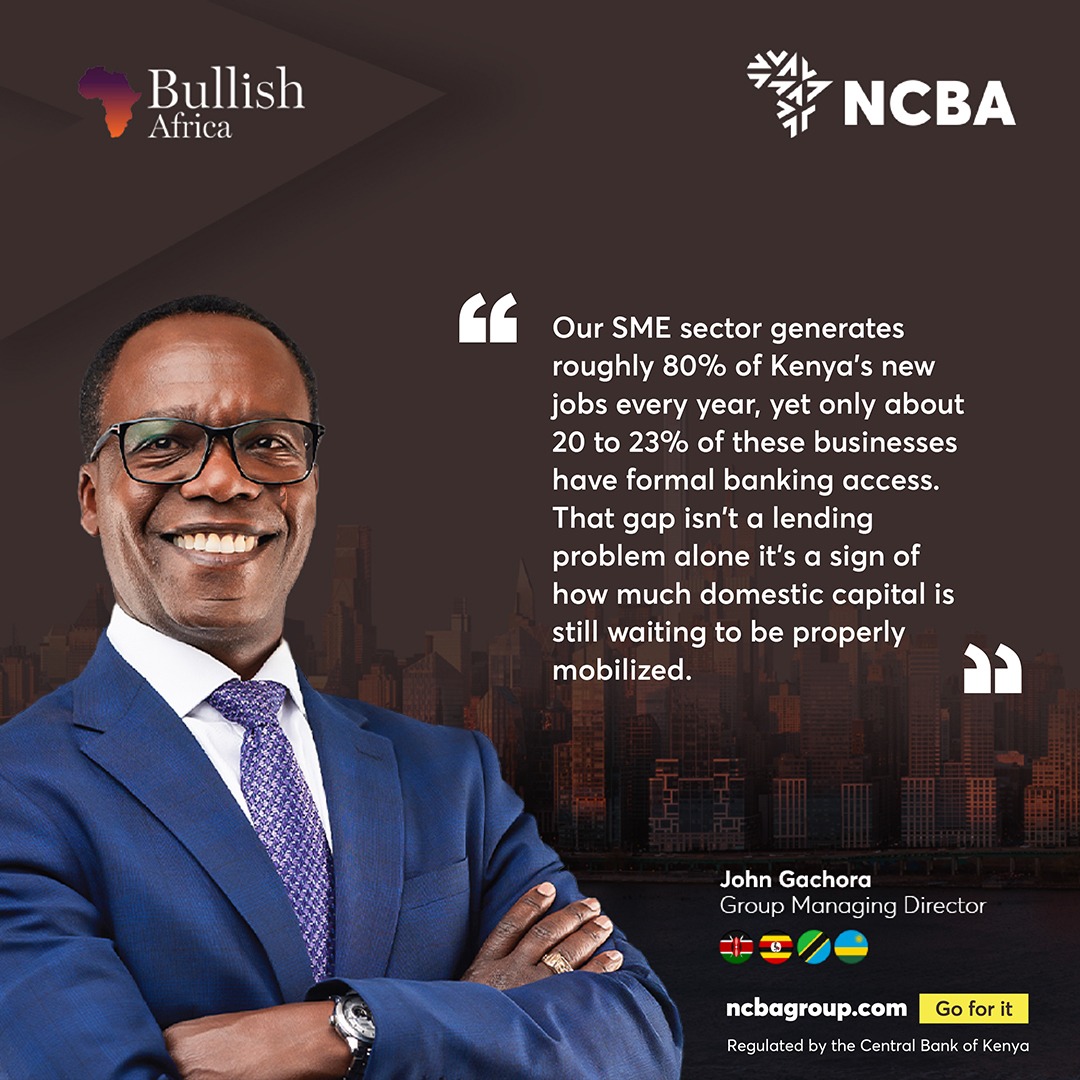
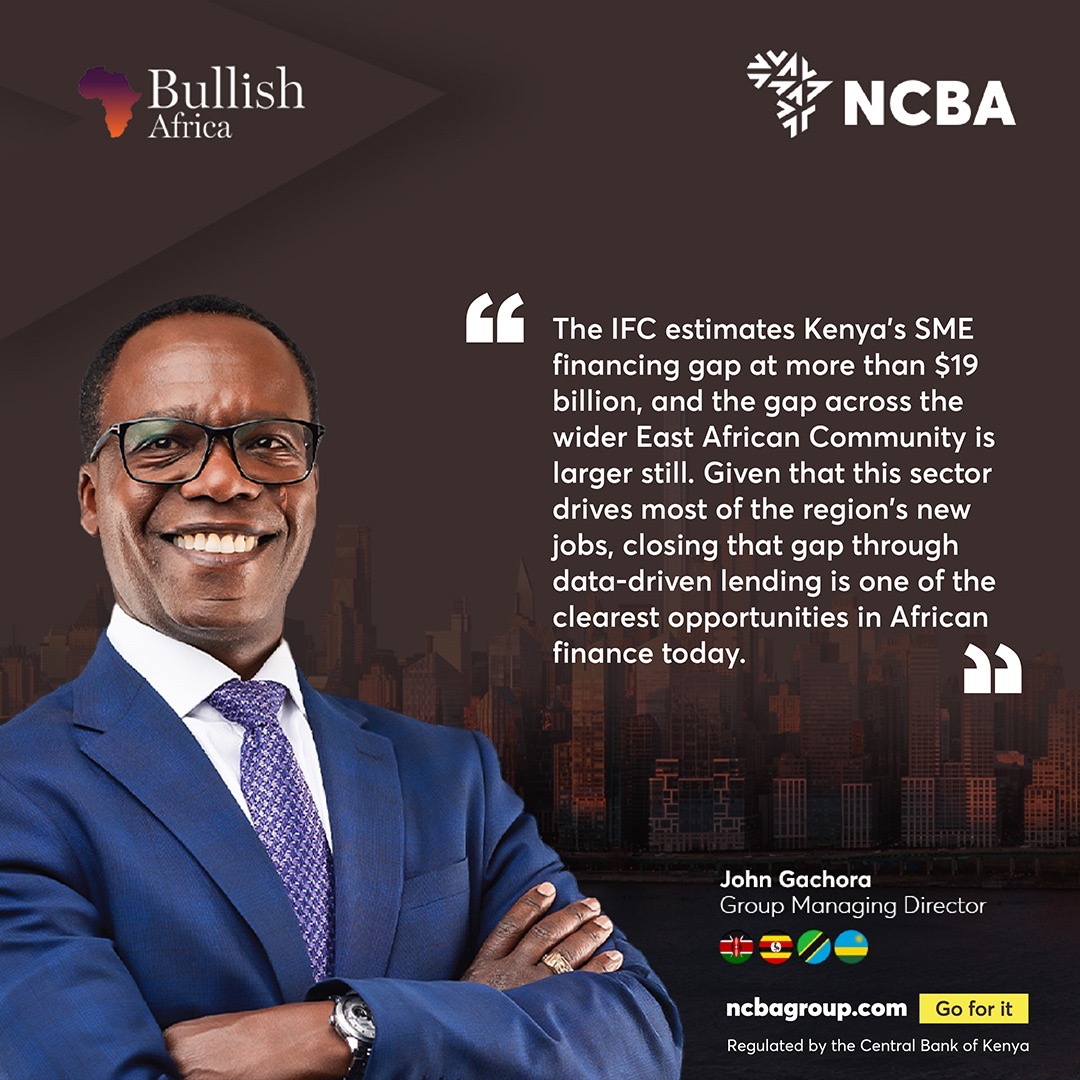
NCBA’s lending engine against the $331 billion MSME gap is robust: KES 18 billion in MSME lending (KBA data) and KES 819 billion in digital loans disbursed in H1 2026 alone, up 27% year-on-year, with non-performing loans at 10.5% against an industry average of 15.3%.
“We are not competing for the ten-billion-dollar project. We are structuring the ten-million-dollar SME deals that make it economically viable — a much bigger prize,” he said.
CREATIVE ECONOMY
Gachora highlighted a sector contributing approximately 5.3% of Kenya’s GDP, with a medium-term target of 10%. Valued domestically at upwards of $4 billion, the market is underpinned by a young population (more than 70% under 35 ) and mobile penetration exceeding 130%, a demographic profile he said mirrors NCBA’s wider regional footprint.
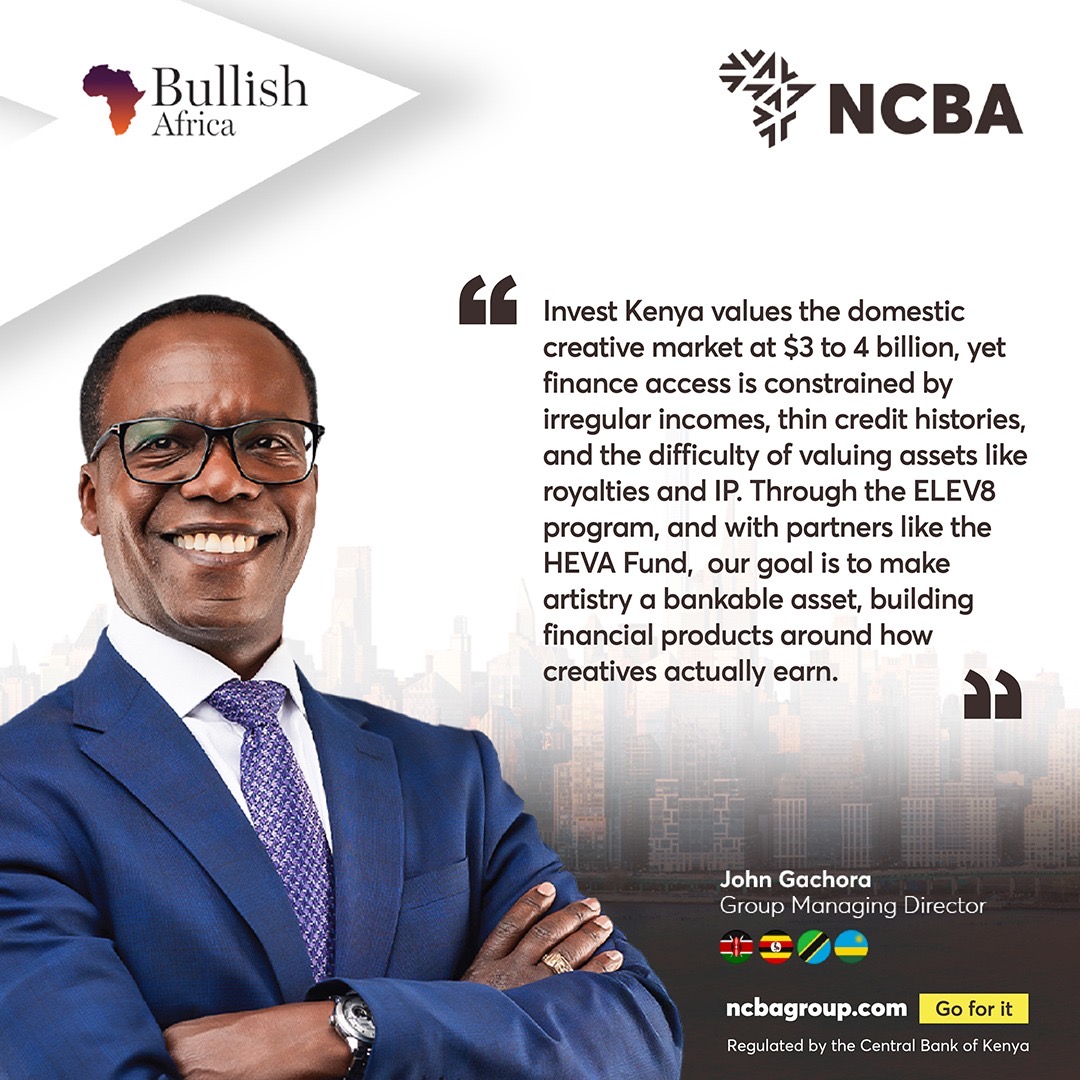
“To bridge this structural gap, we are deploying tailored frameworks through the Elev8 LIVE music accelerator platform and our newly operational 50:50 capital-match Start-Up facility partnership with the HEVA FUND. The product provides up to KES 100,000 in zero-security, short-tenure capital at a highly concessionary 9% interest rate to help early-stage creators comfortably scale their passions into resilient corporate enterprises.”
LOOKING AHEAD
Closing his address, Gachora set out what he is asking of global capital: to bring more than money; long-term capital, guarantees, co-investment, risk-sharing, sector expertise and technology; “Invest in Africa by investing in the intermediation layer, the banks, managers and platforms that turn commitments into local outcomes” he said.
-ENDS-
For media enquiries, please contact:
Nelly Wainaina | Group Director- Marketing, Communication and Citizenship | NCBA Nelly.Wainaina@ncbagroup.com |Tel: +254 711 056 444
About NCBA Group
NCBA Group is a full-service banking group providing a broad range of financial products and services to corporate, institutional, SME and consumer banking customers. NCBA Group operates a network of over 100 branches across five countries, including Kenya, Uganda, Tanzania, Rwanda, and the Ivory Coast. Serving over 60 million customers, the NCBA Group is the largest banking group in Africa by customer numbers. NCBA Bank Kenya PLC is one of the leading banks in terms of assets. The Bank continues to play a key role in supporting Africa’s economic ambitions. The Bank is a Market Leader in Corporate Banking, Asset Finance and Digital Banking.